5 Interesting Japanese Vending Machines

Japan is known for having some straight up wacky vending machines, but they’re not all insane. Here’s five vending machines you can find in Japan that will have you shaking out your pockets for change.

いただきます!

For the uninitiated, Japan is known for having an abundance of vending machines containing everything from snacks and coffee to towels and eggs. Odd? Sure. But these machines are an interesting part of Japanese culture and a fun topic to explore. Here are 5 of the most interesting Japanese vending machines you could come across on a trip to Japan.


 Photo by Hector Garcia on  ageekinjapan

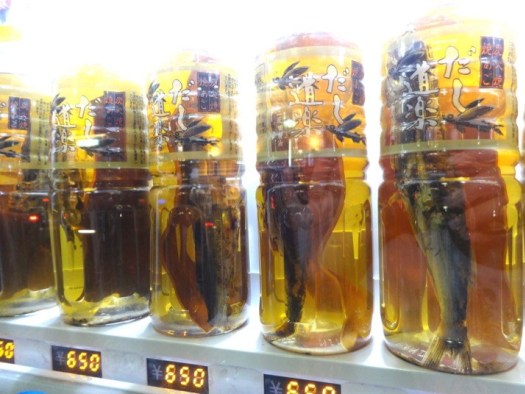
Flying Fish Soup

Dashi Doraku, also known as flying fish soup is a machine that vends little fishes in a bottle of broth to pour over your noodles. It may seem a little odd at first, but these little fish help to give an authentic ramen-shop experience to your cheap 100円 shop ramen. The Dashi Doraku vending machines started in Hiroshima but have since begun popping up elsewhere as their popularity grew.


 Photo by Brian Merchant on  Treehugger

Lettuce

The Chef’s Farm machine produces 60 heads of lettuce per day without any sunlight! Using 40-watt fluorescent lightbulbs, these little powerhouses produce your veggies day in and day out using only artificial light. The seeds are put into the machine’s trays manually by the workers who service them, but the little enclosed garden does the rest!


 Photo by Mami Suzuki on  Tofugu

Eggs

Your random hankering for never-ending eggs is quenched with this vending machine! Farm fresh eggs are categorized into conveniently priced bundles depending on quantity and size. With this machine you would only need to make a short walk to the machine. This is of course assuming you live in a small farming community as that’s where these machines are usually found.


 Photo by take_freedom on  Instagram

Pizza

Ever wanted a fresh pizza but didn’t want to deal with the human aspect involved? Here the machine lets you choose all your topping options just the way you like it and it handles the rest. It kneads and spreads the dough, adds the toppings, and bakes it right there in the machine. It’s like heaven in a box!


 Photo by Yukiko Yanagida on  Pinterest

Hot Menu Vending Machine

Nothing is more convenient than frozen meals. They’re quick, sometimes mostly healthy, and convenient. All you need to do is pop them in the microwave and out comes a meal. This machine spits out similarly styled meals for cheap! Not really sure if we needed a vending machine to make microwave meals for us but it’s the idea itself that makes this vending machine interesting.

Don’t these fun and interesting vending machines make you want to travel to Japan all the more? Definitely add some of these to your travel plan if you’re heading out soon, you surely won’t be disappointed!

Nexflix’s Secret Japanese Options

Getting your fix of Japanese language through media can be a daunting task when you’re just starting out as most sites serving Japanese media are in Japanese. But everyone has Netflix, let’s use Netflix’s secret language functions to get that audio into Japanese!

SHOW ME YOUR SECRETS NETFLIX!

If you have the desire to learn Japanese and have a Netflix account you’ve probably wondered what things you can watch in Japanese to help you pick up the language. Sure, you can watch anime or a J-Drama in Japanese, but what about your favorite American sitcoms? Finding foreign language content to watch can be difficult when outside of the target country’s border, but I’m here to help!

ONTO THE SECRET! 

Did you know that you can switch the audio language for much of the content on Netflix? This isn’t just for television and movies originally in Japanese, either. Many movies have been given a treatment by talented Japanese voice actors and you can experience their performances!

Now, to make things easier, Netflix has given us the option to search through its large library by audio language through their website. All you have to do is follow this link and follow the instructions below. Super easy!

INSTRUCTION TIME!

  1. After you’re on the website make sure “Audio” is selected and then select “Japanese” as your target language.
  2. Next, choose what you want to watch from the given list and press play.
  3. Click the icon in the bottom right corner of the video and select Japanese!

SOME WORDS OF WARNING

Netflix’s language features are extremely buggy right now. I was unable to choose Japanese as a language option using devices such as a PS4 or smart TV even though the website shows it as an option. ALSO, if you don’t choose that you’re looking for Japanese, using the link provided BEFORE you search the show, it won’t show up as an option on the language list. This also goes for pulling up known Japanese audio shows on the previous platforms I mentioned. Odd? Yes. Actually a bug? No idea.

Anyways! Sit back, relax, and enjoy all those new options!

Should You Use Romaji?

RomajiーJapanese spelled using the writing system you already knowーis something many new learners of Japanese will rely on for all their information. But does it hurt more than it helps?

SPOILERS: 

Don’t even think about using it.  


ROMAJI, WHAT IS IT? 

Simply put, Romaji is the Roman character spelling of Japanese words. Simple, right? So why don’t we all just learn Romaji instead of that scary Kanji and the two other writing systems Hiragana and Katakana? We don’t use it for a couple of reasons. For one, nobody in Japan is writing in Romaji. It’s confusing, and due to all of the homonyms in the Japanese language, things can get more than tricky if you’re trying to read everything using Romaji. For example, let’s say I write Kyuuban in Romaji. What did I just write? Cuban? Suction cup? The number nine? If you answered all of the above, you would be correct. 

“ONE SYSTEM TO RULE THEM ALL?”

To make matters worse for Romaji, there isn’t a set system for actually “translating” Japanese into Romaji that all people equally follow. Let’s take a look at the word “Romaji” to help get this point across. Romaji is normally spelled ローマ字 but look at how you would spell it using Roman characters: Rōmaji, Rômazi, and Rômazi. This one word has three possible spellings in Romaji. 

Tofugu has another amazing example in their article here that I just have to mention. It shows another word 大きい with its Romaji examples: Oki, Ookii, Ôkî, and Ōki. None of these are wrong in any way and would be accepted equally in situations where they’re used. See? Romaji is trash…

DON’T, JUST DON’T 

Long story short, just learn how to read the original Japanese characters as soon as you can. At the end of the day, Romaji is just meant to be a bridge to help foreigners along in the country or when they’re FIRST starting Japanese. Once you can read Hiragana and Katakana, drop Romaji. Trust me.